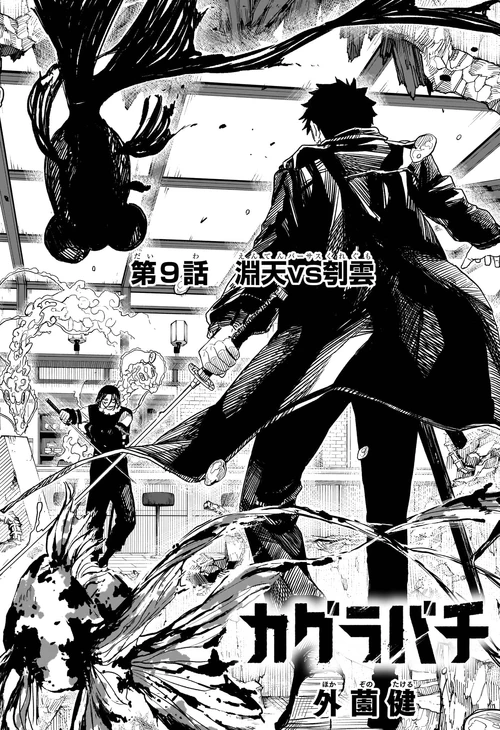
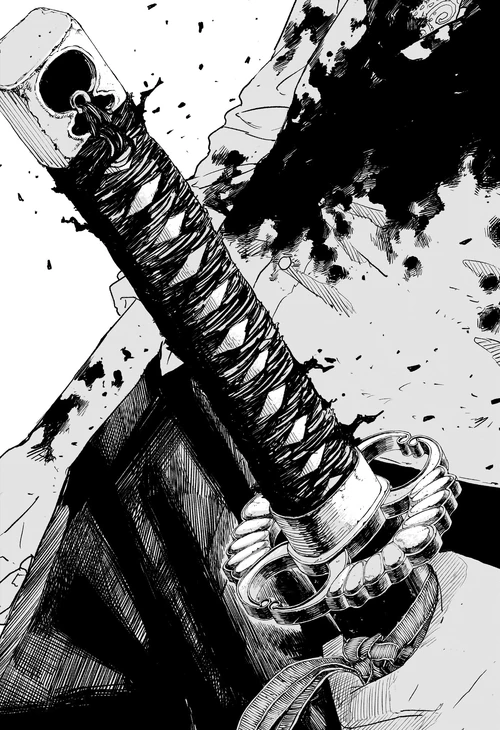
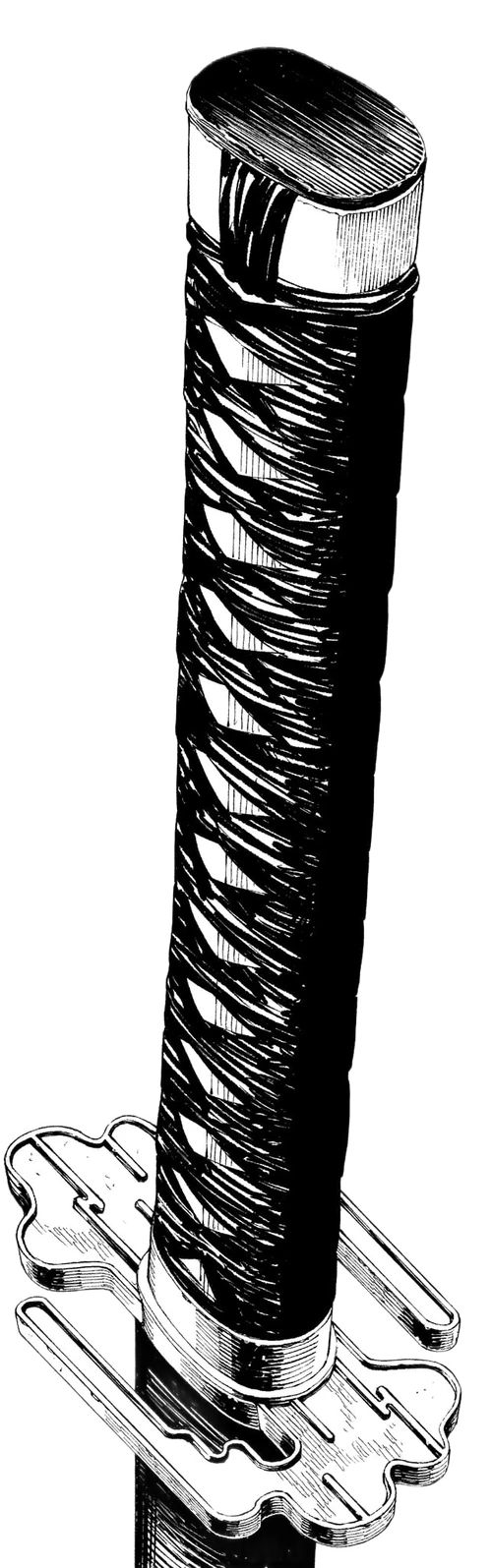
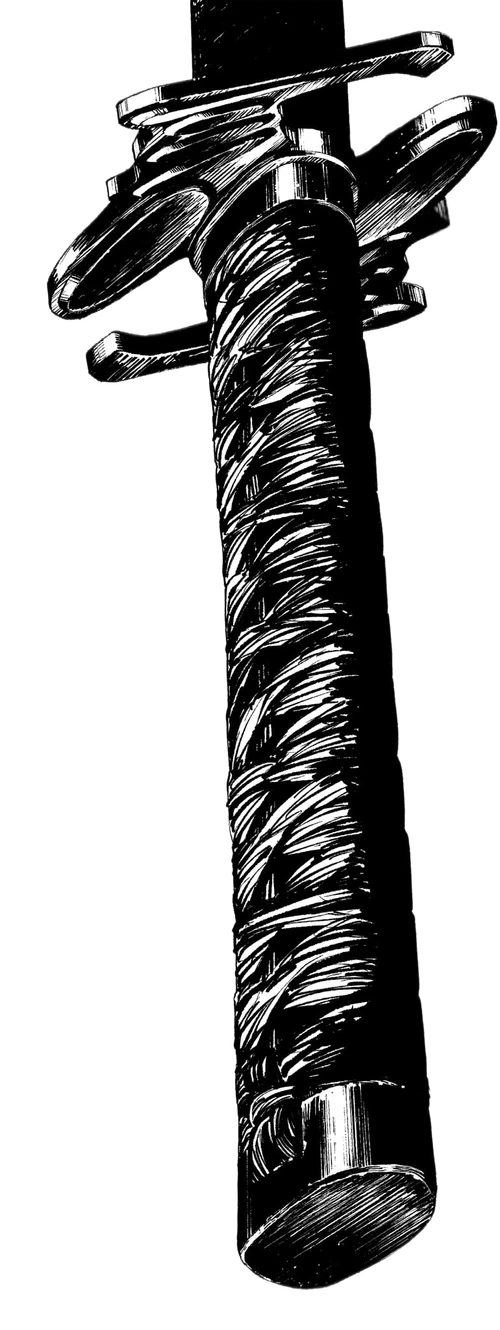
An Enchanted Blade (妖刀, yōtō) does not “cast” so much as overfill. Spirit energy becomes too large for the body and leaves as a shape, goldfish, clouds, flowers, feathers, oiran, that can be steered, seen through, and charged into the steel so the bearer can spend techniques while empty-handed. The swords share a kanji with sorcery (妖術, yōjutsu). The difference is that the art left the body and did not come back. Kunishige cut seven of them from Datenseki. Six won a war. The seventh was made to finish them.
Most blades have three named techniques and a True Realm when the wielder’s intent locks with the sword. Magatsumi refuses the three-count. Anyone who holds the sheathed Shinuchi starts becoming Akemura Soga.
Lifelong Contracts
Lifelong Contracts (Meimetsu Keiyaku) bind a blade to one nervous system. The bearer’s innate sorcery goes dark until the contract is cut. That is why Uruha cannot use Crimson Recital while Kumeyuri is his, and why the Hishaku spent three years trying to open the wartime contracts by killing bearers.
Magatsumi’s contract is the master key: if Akemura dies, the other five wartime bearers die with him. Destroy Magatsumi and the knot comes apart. Cut the contract without cutting the person, Samura’s specialty, and the old art limps back. Enten is outside that knot. It was never one of the six.
True Realm
True Realm (Honryō) is not a transformation gauge. It is what the wielder wants the steel to do when they finally mean it. Sojo’s Cloud Gouger “gained slaughter” because that was his brief. Enten’s True Realm is Magatsumi’s death. Akemura’s Malediction is True Realm as policy: a wider mouth after a treaty already existed. Extensions and “dark power”, Mei: Shred, black Suzaku, are what happens when intent, mortality, and Datenseki agree.
Why Enten is different
The public knows six Enchanted Blades. The Kamunabi want six Enchanted Blades. Enten is the seventh, forged after the war, with Chihiro, because Kunishige could not smash the wartime six on an anvil. It is the first blade built as a counter rather than a weapon of state. A wartime blade manifests weather, flowers, banquet ghosts. Enten manifests the house. Nishiki’s cloak shrugging off Spider and vitality-drain is the design brief, not a random buff. See What Enten was forged for.
Known and unnamed
Five blades have names in the printed chapters. Two wartime swords do not.
- Enten 淵天, seventh, post-war. Chihiro. Goldfish. Made to end the other six, especially Magatsumi.
- Cloud Gouger 刳雲 (Kuregumo), Ibuki Misaka → Sojo → Chihiro (dying contract). Lightning, ice, weather. Bisected.
- Magatsumi 勾罪 (Shinuchi 真打), Akemura. Flowers, insects, Malediction. The strongest, and the leak.
- Kumeyuri 酌揺, fifth forged. Uruha → Hiruhiko. Hallucination and play.
- Tobimune 飛宗, support blade. Samura → Iori. Feathers, owl, black fire.
- Two wartime blades remain unnamed. Subaru Urita is a surviving bearer; one portrait in the war ensemble is still unnamed.
For the ore, the contracts, and the school that cuts them, see Datenseki and Sorcery. Every printed technique, plus the major innate arts, sits on the technique catalog. Original Cloud Gouger bearer: Ibuki Misaka. Surviving unnamed bearer: Subaru Urita.