Official Japanese jackets. The site chrome stays in Hokazono’s white, black, and blood red; gold is Enten’s fish. Notes under each book are about the printed object, not a replacement for it.
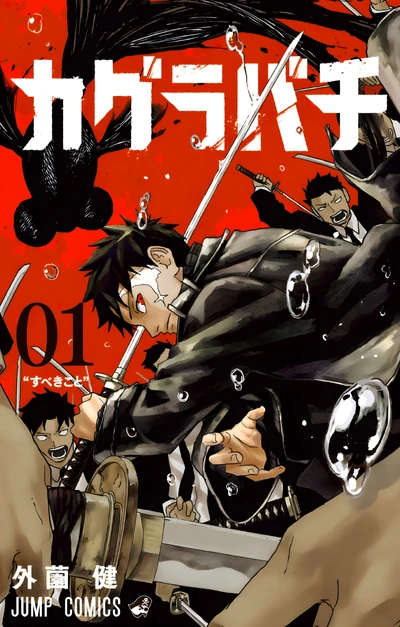
Vol. 01 · Mission
Rusty ruby asphalt, white logotype, Kuro overhead. Chihiro centered, black volume numeral. The law of the series in one jacket: coat already stained, fish already furniture. Asahi’s white-black-red brief, printed.
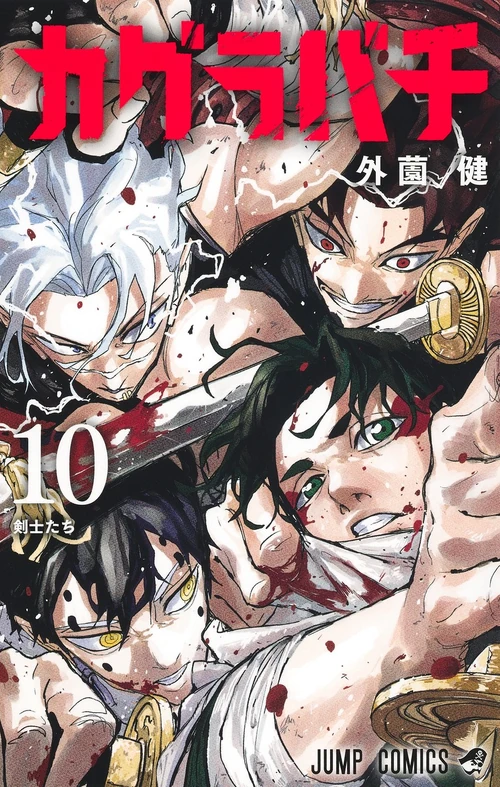
Volume 10’s four
Natsuki, Hokuto, Uruha, Yura. The Swordsmen. A Kamunabi squadron leader, the Hishaku who killed his brother, the bearer who got Kumeyuri, the mind who ordered the raid. Volume 11 is Heroes with quotation marks in the chapter index for a reason. Volume 12 is solicited to close Part 1 and open Irishima. Jacket studies on this page stay visual. The names under Volume 10 now have files: Natsuki, Hokuto.
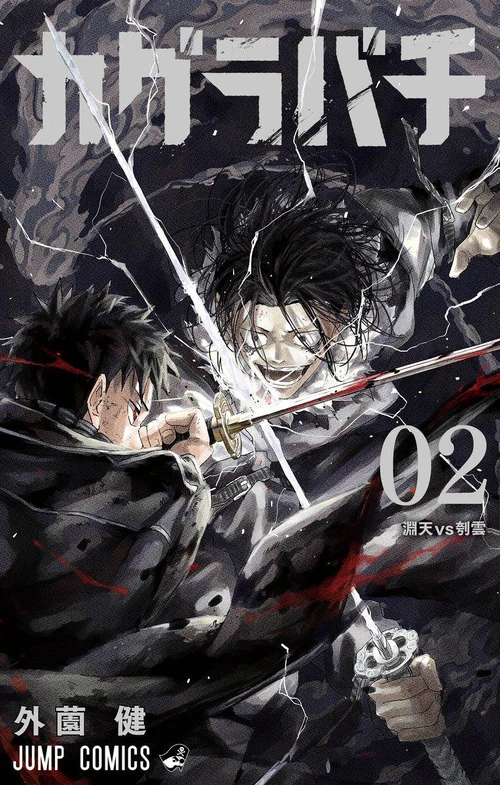
Vol. 02 · Enten vs. Cloud Gouger
Chihiro and Sojo. Storm cyan enters so the red-black triad has a rival. Night steel versus weather. The first time two readers of Kunishige share a jacket, the way chapter 9 shares a panel.
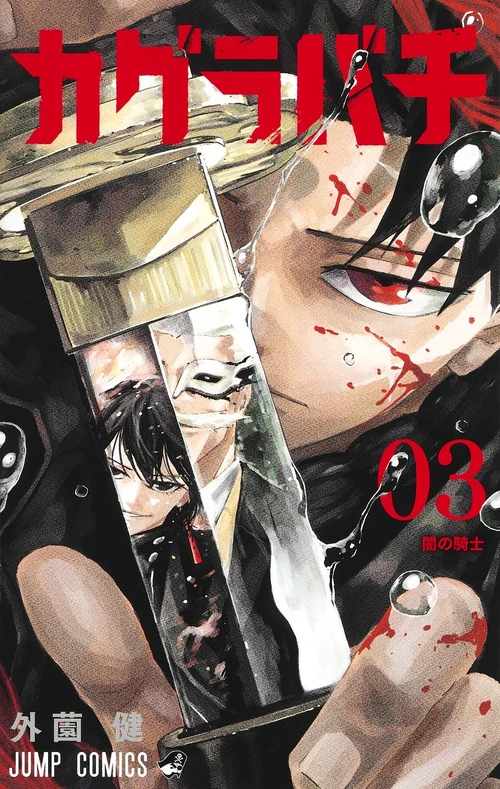
Vol. 03 · Knight of Darkness
Chihiro, Hiyuki, Kyora. Flame-orange against auction green-black. The state, the son, and the eleventh auctioneer before anyone has surrendered Enten on purpose.
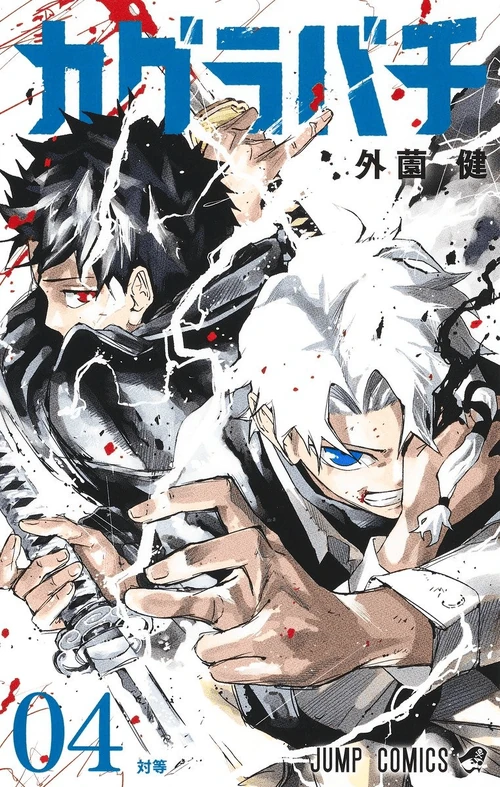
Vol. 04 · Equal
Chihiro and Hakuri. Two figures, storehouse dusk. The title is the relationship the Sazanami refused to grant a discarded son. Architecture as a pair.
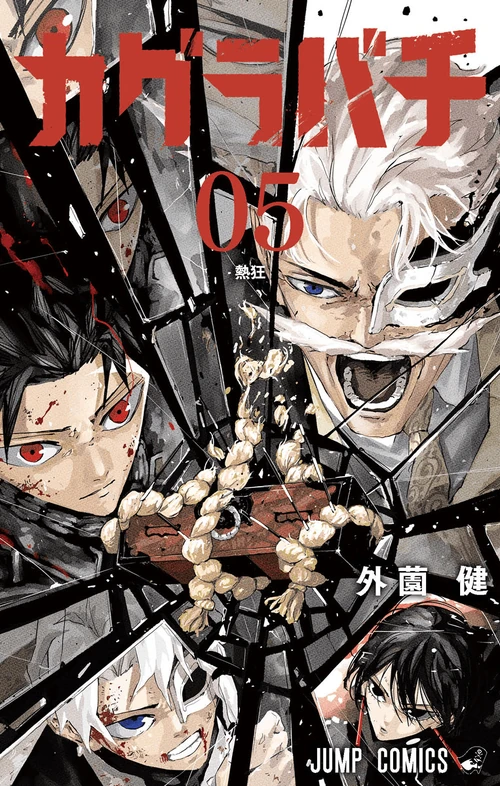
Vol. 05 · Fervent
Crowded jacket: Chihiro, Kyora, Hakuri, Hiyuki. Shinuchi heat. A cast photograph for the night the two-hundred-year market ends. Group jackets start here.
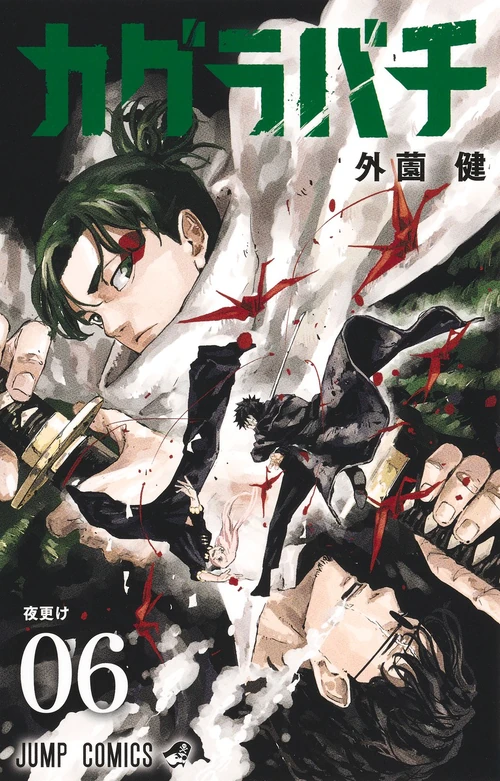
Vol. 06 · Daybreak
Uruha / Samura yin-yang, Chihiro vs Hiruhiko in the blood center. The long book’s first photograph: two wartime bearers as a coin, the Hishaku’s loudest younger blade opposite the son.
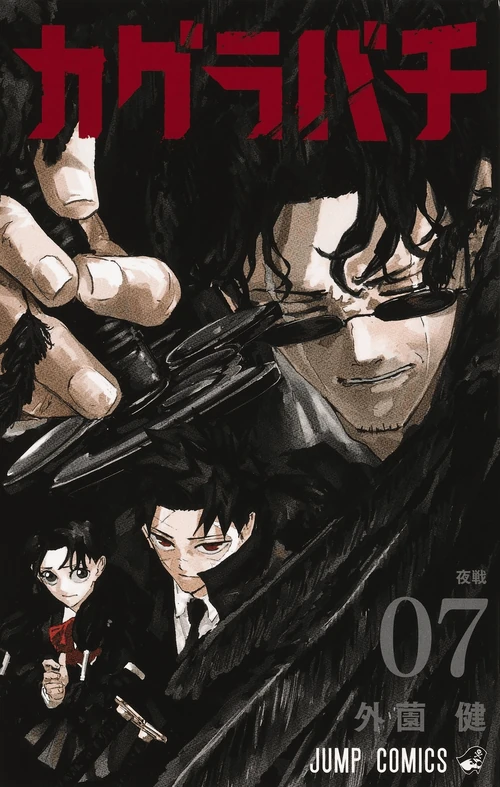
Vol. 07 · Night Battle
Samura, Chihiro, Iori. Night blue, sunglasses, hotel dark. The father, the son who copies Iai, and the daughter the seal is about to fail. Owl is already in the air.
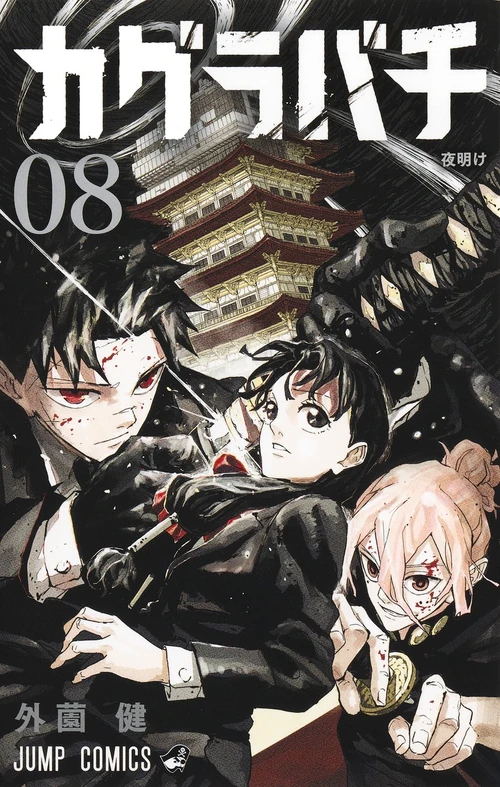
Vol. 08 · Dawn
Chihiro, Iori, Hiruhiko under Owl at the Kyoto Bloodshed Hotel. Banquet and Play about to take the set. The hotel silhouette is the stage Kumeyuri was forged to throw.
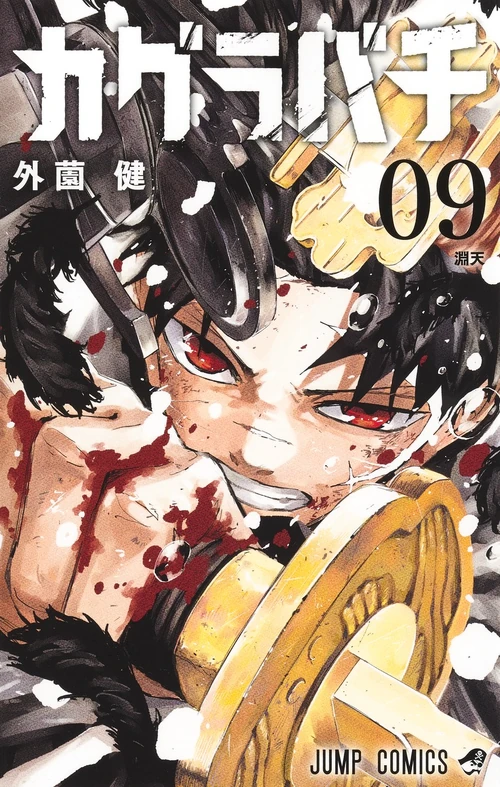
Vol. 09 · Enten
Single-figure Enten jacket. The title and the sword are the same word. Chapter 83’s brief as an icon: one son, one retraction, no cast photograph. Returns to Volume 1’s grammar.
Vol. 10 · The Swordsmen
Natsuki, Hokuto, Uruha, Yura. A four-man war photograph. The leak is on the table. Shinuchi starts spending at range. Ensemble ink for a basement the present tense has almost reached.
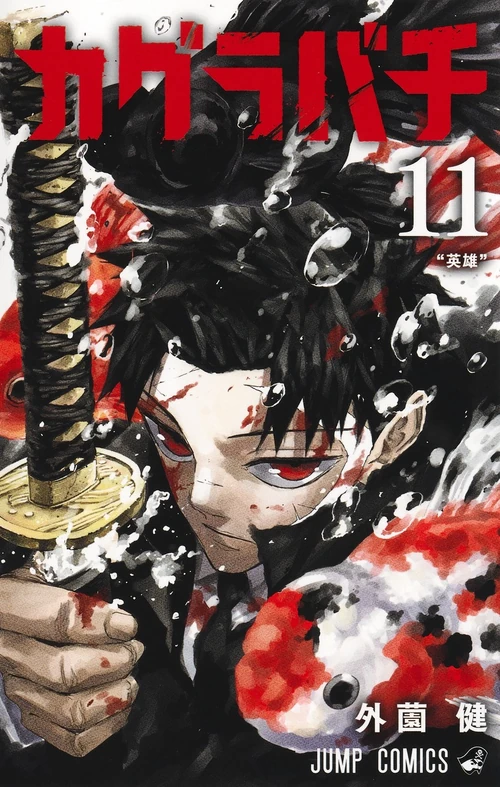
Vol. 11 · Heroes
Snow, Aka and Kuro, Enten raised. Part 1’s last icon. The chapter index puts quotation marks on “Heroes.” The jacket does not. White enters so the triad can survive a title the press already used.
Volume 1 sets the law: Chihiro centered, Kuro overhead, asphalt-red field, white logotype, black volume numeral. Later jackets keep that triad and invite one extra hue when a rival blade is on stage (cyan for Cloud Gouger, snow for Volume 11). Group jackets (5, 6, 10) are cast photographs in ink. Single-figure jackets (1, 9, 11) are icons.
Hokazono said the palette out loud in the Asahi interview. White, black, and red because the hero’s coat is already stained. Gold is Enten’s fish when the jacket needs a household object instead of blood. Volume 2 is the first time a wartime weather kit is allowed on the cover as a rival color. Volume 3 borrows Hiyuki’s flame so the auction has a temperature. Volume 11 borrows snow so “Heroes” can sit on a field that is not the press’s gold.
The faces are an argument about who the book thinks the volume belongs to. Volume 4 is two people and a title the clan would not use. Volume 6 puts wartime bearers on a coin and the Hishaku’s younger blade in the blood. Volume 7 is a family the seal is about to fail. Volume 9 refuses a cast: one son, one word, the brief as an icon. Volume 10 is a war photograph that includes Yura, which is the present tense admitting the collector belongs on the same paper as the swordsmen.
English VIZ jackets are a parallel object. They follow VIZ’s current Jump trade dress, not a color-matched set. If you are collecting the printed law, the Japanese Jump Comics are the ones that keep the red-to-black spine bar. Notes under each book above are about that printed object. Buy the volume. Do not send scans. The volume guide has ISBNs and chapter maps. The color-page log has the Jump openings that are not jackets.